Fairfax Virginia DUI Attorney Patrick Blanch

How should I choose a Fairfax DUI Attorney?

Your attorney should be knowledgeable and experienced
Attorneys tend to know more about some areas of the law than others.  Your DUI defense attorney should be an attorney who focuses on DUI defense.  I have personally handled hundreds of DUI cases from initial consultation to completion.  When you contact Elders, Zinicola & Blanch, PLLC, you will know that I have seen cases like yours before and that I know exactly what to do to put you in the best possible position.  If your attorney needs to look up the law to tell you about your case, you should consider a different attorney who doesn’t have to learn as he or she goes.

Your attorney should not simply assume that the breath or blood test in your case was accurate.  Your attorney should know how Virginia’s EC/IR II breathalyzer machine works, and how to cross-examine the police employees who operate the breathalyzer machines. Your attorney should know how to obtain the maintenance records for the device used to test your breath or blood sample, and he should know how to read them and what they mean.  Your attorney should have a relationship with toxicologists who can provide an expert opinion in your case.  Many times, these scientific and technical defenses go overlooked.  At our firm, they are routinely examined.  If your attorney can’t explain to you, in detail, how the breathalyzer machine works, you should consider a different attorney who can.

I have tried dozens of DUI cases to judges and juries, and I have successfully appealed DUI cases to the Court of Appeals and Supreme Court of Virginia.  If the attorneys you have consulted with do not have these credentials, you should consider an attorney who does.

Your attorney should tell you the truth
When consulting with attorneys, pay special attention to whether the attorney is telling you what you want to hear, or whether the attorney is willing to tell you the hard truth.  A good attorney listens to everything the client has to say about his or her case, and knows the law well enough to give the client an accurate and honest assessment of his or her case. 

Your attorney should know the courthouse
The best attorneys will be familiar with all of the judges and prosecutors in the courthouse.  The judge and prosecutor involved in your case can be as important to the outcome as what you are actually accused of doing.  Ultimately, judges and prosecutors – like the rest of us - are all unique people who have preferences, and your attorney should be aware of those preferences and guide your case to take advantage of them. 

Your attorney should put you ahead of their own ego
Although the prosecutor is your adversary, he or she is also endowed with great discretion in handling your case.  Therefore, the best outcome is often accomplished by persuading the prosecutor.  Overaggressive defense attorneys do their clients a disservice by being too confrontational with the person in the best position to help you.

A defense attorney must always be ready to try your case if that is the best option.  But, we believe that a defense attorney does more harm than good by being unnecessarily confrontational with prosecutors.  We take the time to get to know the local prosecutors, engage them as our peers, and use persuasion – rather than unnecessary aggression - to make our client’s case.  Aggression is for the courtroom, not the negotiating room.

Your attorney should treat your case as if it was their own
Every client believes that their case is important – and they are right.  Whether or not your charge carries the possibility of jail, it will certainly impact your life for a long time.  It is not unusual to hear from our clients that their previous attorneys were impossible to reach on the phone, or that their attorney did not explain an important consequence of their case.

It is our policy that every client deserves to have their attorney devote the time and attention necessary to explain the charge against them, the defenses available to them, and the likely punishments the client may face.  As your attorney, I know that I work for you.  You will always be called back, you will always be given the attention you deserve, and you will always be treated with respect and dignity.

At Elders, Zinicola & Blanch, we work as a team.  While you should expect to work with the attorney you’ve consulted with, every client’s case is assessed to determine whether their case would benefit from the attention of multiple attorneys who bring different assets to the table.  It is not unusual for more than one of the firm’s partners to appear for a case, even if it is only a traffic ticket, if we believe that it will best serve our client.  This commitment shows the prosecutor that we take each case seriously, and assures our clients the highest level of representation.

Virginia DUI Law Highlights

You Don’t Have to Drive to Get a DUI
Virginia’s DUI law prohibits not only driving a vehicle, but also “operating” one.  Virginia’s courts have interpreted “operating” to mean simply putting the key in the ignition and activating the electrical equipment, such as the radio, without even turning on the car’s engine. 

Accident Cases
If you’ve been involved in an accident after consuming drugs or alcohol, there are several good reasons to consult an attorney about your case.  First, the court may treat your case more harshly than a “run-of-the-mill” DUI – meaning that you may serve a lengthy jail term or the court may deny you a restricted license.  Second, there are technical legal defenses that apply to accident cases that could result in the dismissal of your charges.

Field Sobriety Tests
Virginia law considers field sobriety tests – including roadside breath tests - to be voluntary.  The officer cannot force you to do field sobriety tests.  Even if they threaten to arrest you if you refuse, you should almost always refuse to perform field sobriety tests!  Your performance on these tests is almost always the most important evidence against you, so don’t give them the evidence that they are going to use to convict you!  Field Sobriety Tests conducted by police officers are unscientific and they are designed for you to fail, so that the officer can justify arresting you and subjecting you to a breath or blood test at the police station.

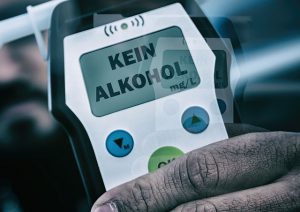
The roadside Preliminary Breath Test (PBT) breathalyzer devices used by police to measure your blood alcohol content are rarely calibrated to be accurate and can give false high readings.  Even if you have only had one drink, taking a PBT can almost never help you, and it will almost always make your case much harder to defend, since Virginia law provides that any positive result for alcohol is a sufficient basis for a police officer to arrest you and subject you to a breath or blood test at the jail.

Detention and Arrest
Police officers are entitled under the Constitution to conduct limited roadside detentions of suspected drunk drivers, so long as the duration and scope of the detention is reasonable.  Police officers often overstep this constitutional boundary by detaining a suspect without sufficient evidence, by detaining a suspect for too long, or by making threats or statements that turn the detention into an unlawful arrest.  Your attorney should know the law well enough to tell you how each statement of a police officer affects your case, and whether we can prevent the court from considering damaging admissions you made while speaking with the police officer.

The Virginia Code states that providing any positive result on the roadside breath test is sufficient evidence to arrest you and subject you to blood or breath testing at the jail.  If you have consumed alcohol and want to avoid a DUI conviction, don’t agree to the roadside breath test.

Remember, when you are the target of a police investigation – even if it’s just a roadside encounter – your best course is usually silence.  If your answer is going to get you arrested, then don’t answer.  If the police are taking the time to threaten you if you don’t speak, then they probably don’t have enough evidence to convict you, or even to arrest you.  Don’t make statements that give them the evidence that they need to convict you. 

Implied Consent Law/Refusal
If you have been arrested for DUI, and the arrest occurred on a public roadway, then the police are entitled to a sample of your breath or blood.  If you refuse, you will be charged with the offense of Refusal.  The penalty for refusing does not kick in immediately.  Instead, the Commonwealth must try you and convict you of the Refusal charge.  A refusal usually makes the Commonwealth’s DUI case weaker, meaning that refusing generally improves your chance of winning the DUI charge.

But, even if you win the DUI case, the court may still find you guilty of Refusal.  A first offense Refusal is not a criminal offense like a DUI, so there is no fine, no jail time, no probation, and no requirement to do the ASAP program.  The only penalty for Refusal is a one year license suspension, but the court cannot give you the restricted license that you can receive for a DUI – meaning that you will be walking for a year. 
If you have previously been convicted of Refusal or DUI, then refusing again is a criminal charge that can result in a three year license suspension, up to 12 months in jail, and a maximum $2500 fine.

BAC and Intoxication
The Blood Alcohol Content (BAC) is the most important evidence against you in a DUI case.  Virginia law states that if a suspect’s BAC is 0.08 or higher, the court may infer that the person was intoxicated and find them guilty of DUI.  If the Commonwealth does not have a BAC to use against you, they will rely on your driving behavior, your statements to the police officer, and the field sobriety tests to show the judge that you were intoxicated.  For this reason, you should understand that field sobriety tests and admissions that you make to the police officer will be used against you in court.  The law only requires you to give a breath or blood test at the jail if you are arrested.  It does not require you to speak to the police officer, admit wrongdoing, or do other tests for the officer.  Remember, the police officer is a person with a job to do.  They wouldn’t be questioning you if they didn’t suspect that you are committing a crime.  If the officer threatens to arrest you to get you to make incriminating statements or to do other tests, it is likely that you will be arrested whether you comply or not.

Drugs vs. Alcohol
Virginia’s DUI law applies to both drugs and alcohol.  If an officer has probable cause to believe that you are under the influence of drugs, the implied consent law permits him to take a blood sample unless you refuse.  In drug cases, the Commonwealth typically must introduce the blood test results into evidence, and explain them, which requires one or more additional witnesses.  These prosecutions are more expensive and time consuming that alcohol DUIs, and that drain on the Commonwealth’s resources can put you in a favorable position.  Your attorney should know about the toxicology of drugs, and how to prevent the Commonwealth from using their drug evidence against you.

1st Offense Penalties
Even if your DUI case has no defenses likely to lead to your acquittal, you should still retain counsel to attempt to negotiate a settlement that results in a reduction of the charge, or at least the minimum punishment possible, and a restricted license so that you can keep your job and care for your family. Every DUI carries five separate types of possible penalties: 

  • Jail: The court may imprison you for up to 365 days on a first offense DUI.  Courts may also impose a “suspended sentence” in DUI cases.  That means that the court can sentence you to jail, but not require you to serve the jail sentence so long as you comply with the terms of your probation.  In some instances, however, the court is more likely to impose both an active jail sentence and a suspended jail sentence.  If your case involves a car accident, personal injury, a high BAC, or other dangerous or reckless behavior, you are more likely to go to jail immediately. 

In high BAC cases, the jail time is mandatory.  If your BAC is 0.15 to 0.20, the court must impose five days in jail.  If your BAC is 0.21 or higher, the court must impose ten days in jail.

  • Fines: The court may fine you between $250 and $2500 dollars on a first DUI offense.  If your BAC is above a 0.15, you may be subject to additional mandatory fines. 
  • Probation: If you are convicted of DUI, you will almost certainly be placed on probation for a period of one year.  If you violate your probation, the court may impose your suspended jail sentence.
  • License Suspension: If you are convicted of a DUI, the court must suspend your driving privilege for one year.  The court may grant you a restricted license to drive to work and for other purposes if it believes that you are not an ongoing danger.  As your BAC gets higher, the odds of getting a restricted license get lower.  If you drive while your license is suspended for a DUI, or if you drive outside of your restricted license, the police will impound your vehicle and charge you with Driving on a Suspended/Revoked License, which carries up to one year in jail, up to $2500 in fines, and an automatic one year loss of your driving privilege (on top of your DUI license suspension).  The court may also revoke your restricted license for the DUI charge, find you in violation of your probation, and impose your suspended jail sentence.
  • Virginia Alcohol Safety Action Program (ASAP): every person convicted of a DUI must enroll in and complete the ASAP program, which is the probation entity for DUI charges.  The standard ASAP program is a 10-week educational course with a fee of several hundred dollars.  If the ASAP program believes that you are a substance abuser in need of treatment, ASAP will refer you to court-mandated substance abuse counseling and treatment at additional cost.  Failure to complete these requirements is a violation of your probation, and the court may impose your suspended jail sentence.

2nd Offense Penalties
Second offense DUI convictions come with a mandatory minimum jail sentence of at least ten (10) days and as many as forty (40) days, depending on your BAC and how recently you were convicted of your first offense.  The court must impose a fine of between $500 and $2500.  In addition, the court must suspend your driving privilege for three years, and a restricted license is unavailable until either four months or one year after your conviction, depending on how recent your prior offense was.  An attorney may be able to prevent the prosecutor from using your prior conviction against you, or your attorney may be able to negotiate a settlement where you receive first offender punishment.  Don’t just plead guilty and accept the mandatory punishments.  Get a defense attorney who will aggressively seek to minimize your punishment and get you back on the road.

Felony 3rd and Subsequent Offense Penalities
Three or more DUIs in a ten year period is a felony punishable by up to five years in prison, and a mandatory minimum of between three months and one year, depending on how many prior DUI convictions the defendant has and how recent they are.  The court will also suspend your license indefinitely and imposes a mandatory minimum $1000 fine.  A felony conviction will also prevent you from voting, owning a firearm, and receiving certain public benefits.  You need an attorney who will work to beat the charge, preserve your rights and prevent society from branding you a felon, while minimizing your punishment.

About Attorney Patrick Blanch
Patrick Blanch is an accomplished and innovative trial attorney with particular experience dealing with legal and technical DUI defenses.  Mr. Blanch is a co-author of the 2010 textbook “Defense of Serious Traffic Cases in Virginia.”  Mr. Blanch has been counsel on cases as minor as littering and as serious as rape and murder, and he has obtained acquittals or dismissals for clients charged with “life” offenses including rape and robbery.  Not every DUI case has a defense that will lead to an acquittal, but you should be sure to have an experienced attorney who will find every defense available to you so that you have maximum leverage to reach a favorable result for your case.  Mr. Blanch has handled hundreds of DUI cases, including:

  • Both breath and blood test cases;
  • Drug intoxication cases;
  • Cases with serious traffic accidents;
  • Cases with personal injury;
  • Diabetic DUI defense cases;
  • Cases with unusually high BAC levels;
  • Refusal cases

Mr. Blanch also maintains a robust Appellate practice for individuals who have been convicted at trial but who believe that the Court made errors during their trial. Mr. Blanch’s experience in such cases extends to the Court of Appeals of Virginia and Supreme Court of Virginia, where he has successfully briefed and argued numerous cases.  Mr. Blanch was trial counsel and appeal counsel in the case of Grant v. Commonwealth, in which the Virginia Court of Appeals set aside the DUI conviction because the Commonwealth had violated his client’s right to confront the technician who conducted his BAC testing.  Mr. Blanch has also served as a consultant for cases being argued at the United States Supreme Court.

The Virginia State Bar requires every practicing attorney to attend Continuing Legal Education (CLE) seminars on an annual basis to ensure that attorneys stay up to date on legal developments. Mr. Blanch has been recognized by his peers for his legal abilities by being asked to speak at four Continuing Legal Education seminars: the 2008 Fairfax County Bar Association DUI CLE, the 2010 Virginia Statewide Public Defender Conference in Virginia Beach, and the 2010 Virginia CLE Program “DUI Defense – Smart Strategy, Creative Tactics” in both Fairfax and Charlottesville.  

ALL CASE RESULTS DEPEND UPON A VARIETY OF FACTORS UNIQUE TO EACH CASE. THE CASE RESULTS DESCRIBED DO NOT GUARANTEE OR PREDICT A SIMILAR RESULT IN ANY FUTURE CASE UNDERTAKEN BY THE LAWYERS OF THIS FIRM.


  • Request a Free Evaluation

  • captcha code


Elders, Zinicola & Blanch, PLLC
4085 Chain Bridge Road
Suite 302
Fairfax, VA 22030

Phone: 703-934-8580
Fax: 703-934-8583

http://www.ezblaw.com


Lawyerfind | Lawyerfind Network | Legal Phone Book | DUI Lawyer Locator | Bankruptcy Lawyer Locator | Immigration Lawyer Locator | Site Stats

© Copyright 2012. Elders, Zinicola & Blanch, PLLC - Attorney Web Solutions. All rights reserved. Images are licensed to Lawyerfind Network by Istockphoto lawfully and within the extent of purchased license. Image stock number 764931